Have Questions?
We offer periodic Inquirers’ Classes where we discuss what we believe, and how we worship and pray. This is also a great space for people to ask questions.
Watch the recordings of our most recent Inquirers’ Class.
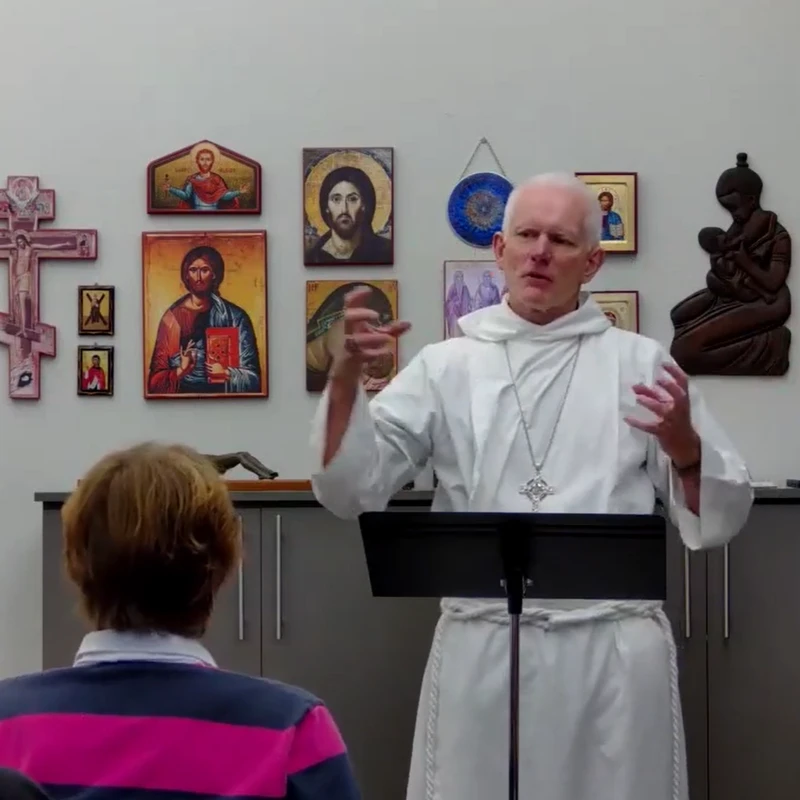
We offer periodic Inquirers’ Classes where we discuss what we believe, and how we worship and pray. This is also a great space for people to ask questions.
Watch the recordings of our most recent Inquirers’ Class.
We are Anglican because our tradition of prayer and worship is rooted in the Church of England and the Book of Common Prayer. We are Catholic because we practice the universal or catholic faith of the church.
Today the word “Catholic” is often understood in opposition to the word “Protestant”; however in the early church, it stood in opposition to the word “heretic.” Those who were not catholic in the universal sense rejected some essential aspect of the faith that was handed down by the Apostles. Thus, we see our Anglican faith as a reformed catholic faith: we believe the church is in continual need of renewal, but also that it must oppose the errors of every age which diverge from the ancient and apostolic faith.
We believe that the Bible and tradition of the Church are inextricably linked. The most accurate interpretations of the Bible are built upon what the original audience—often the early Church—thought the Scriptures meant when they first heard them. That’s why when we teach the Bible, or gather for Bible studies, we take into account the history, authorship, and cultural context of each book.
Every era of the church will have false teachings and teachers. We believe that the ancient, orthodox tradition of the Church is the best safeguard against this. On the one hand, the tradition helps us to identify and correct erroneous readings of the Scriptures; on the other, the Scriptures help us to know when the Church needs reform in its current age.
We believe that prayer is the foundation of spiritual growth and formation. At our church, we pray according to the three-fold Rule of the Book of Common Prayer: the Daily Offices, the Eucharist, and personal prayer—which is practiced according to an individual’s temperament and circumstances.
The goal of our life of prayer is spiritual growth. As we progress in prayer, we grow in our knowledge of God and our experience of his presence in our lives. Spiritual growth also means an increase in self-knowledge—seeing ourselves more accurately in the light of God’s presence. This is also expressed as growth in emotional maturity.
We believe that our progress in prayer and holiness should be guided by spiritual direction. In our tradition, spiritual direction means regular conversations about prayer and what God is doing in our lives. It is helpful to get input from someone knowledgeable about prayer and spiritual growth when we are caught up in the anxiety and struggles of our own lives. Often they can offer a perspective larger than our own.
At St. Matthew’s, spiritual direction is the “framework” of our ministry. We believe that prayer is the main activity of the Christian life, and spiritual progress the goal of that prayer; therefore, we believe that our ministry efforts should be focused on long-term conversations about these two things. Similarly, we believe that spiritual growth can also be aided by spiritual friendships.
If you're interested in spiritual direction, please reach out to someone on our Pastoral Team.
We believe that liturgical worship is an important part of our spiritual formation. As we learn the words and actions of the fixed form and pattern—and what they mean—we develop the ability to pray from the heart. As C. S. Lewis wrote:
Every service is a structure of acts and words through which we receive a sacrament, or repent, or supplicate, or adore. And it enables us to do these things best—if you like, it "works" best—when, through long familiarity, we don't have to think about it. As long as you notice, and have to count the steps, you are not yet dancing but only learning to dance. A good shoe is a shoe you don't notice. Good reading becomes possible when you need not consciously think about eyes, or light, or print, or spelling. The perfect church service would be one we were almost unaware of; our attention would have been on God.
— Letters to Malcolm: Chiefly on Prayer
We believe that Christian faith is inherently communal. As members of the Body of Christ, we discover who we are as unique individuals through our commitment to being with and loving one another in community.
Healthy community takes time and commitment to develop, which is why these things are necessary for spiritual growth. We live in a time where people constantly pursue the next new thing; however, what they really need and desire is to be known and to know others in community. Authentic community is the fruit of our commitment to prayer, spiritual growth, and each other over time.
We believe that mission is about witness. In Acts 1:8, the Risen Jesus told his disciples that they would receive power from the Holy Spirit and be his witnesses to the ends of the earth. Unfortunately, too often the verbal witness of Christians has not been evidenced by a manner of life that bears witness to something different.
This is why we believe that prayer and spiritual formation are the necessary foundation for authentic mission (we must have something to bear witness to). It is unwise to reach out and get people to come to church without paying attention to the spiritual life being cultivated within the church; on the other hand, we should not focus entirely on the spiritual growth of the church without concern for the salvation and needs of those outside of it. We believe the balance is to cultivate an experience of Christ’s power and presence within the church that naturally overflows to faithful witness in the world.
To learn more about our approach to mission, visit Remnant Formation.